
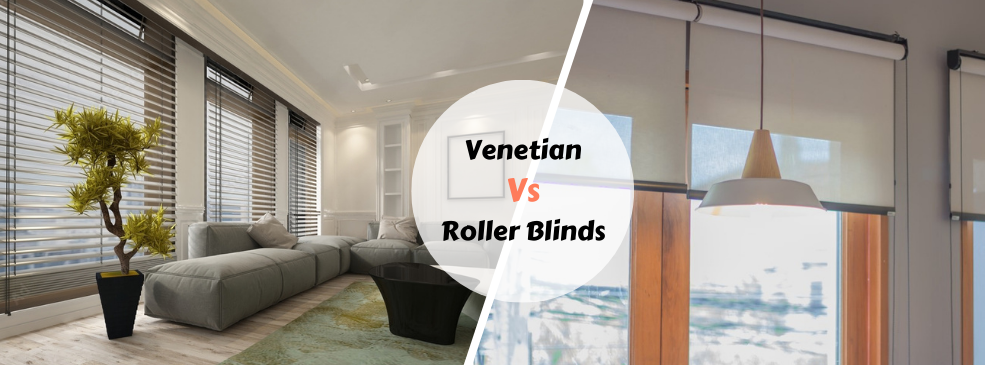
When choosing blinds, you’ll come across two categories: Venetian and Rollers – each has advantages and disadvantages, requiring careful consideration to determine the best fit for your windows. Drawing from our extensive experience assisting thousands of customers in selecting window treatments for their homes and offices, we understand the challenge this decision presents.
Here are the main factors to consider and weigh to make an informed buying decision between Roller Blinds and Venetian Blinds:
Which Is Simpler to Clean: Roller Blinds or Venetian Blinds?
Both are relatively easy to clean. Roller blinds can be wiped down effortlessly with a damp cloth. Venetian blinds also allow easy cleaning, but the process involves wiping down each slat, which vecan be more time-consuming. Both types can be submerged in a bathtub with warm, soapy water for a thorough cleaning. However, caution is advised when cleaning roller blinds in this manner, as there’s a risk of loosening the adhesive that attaches the blinds to the roller.
Is There a Price Difference Between Roller Blinds and Venetian Blinds?
The cost varies based on several factors, such as the quantity needed, sizes, and desired quality. Venetian and Roller blinds come in an extensive range of sizes, styles, and prices. Quality is a determining factor in the cost, allowing you to choose between well-crafted blinds with long-lasting durability or more budget-friendly options. Whether you prefer high-quality blinds designed to last for years or more affordable options that suit your budget, both choices are available online.
Which Provides Better Privacy: Roller Blinds or Venetian Blinds?
Venetian blinds take the lead in this aspect. It is because you can customise the amount of light entering and adjust the level of privacy by adjusting the slats. With traditional roller blinds, it’s an all-or-nothing scenario when opening or closing them. However, modern roller blind options integrate blockout panels with sunscreen panels, offering the best of both worlds. Sunscreen panels permit some natural light while maintaining a substantial degree of privacy. When you’re ready to block out the outside world, lowering the blockout panel does the trick.
Which provides a more fantastic range of colour choices: Roller Blinds or Venetian Blinds?
Both options come in a wide array of colours, but it might be more challenging to locate Venetian blinds in vibrant hues. Venetian blinds are typically available in wood tones and neutral shades like white. Roller blinds are readily found in various colours, including reds, blues, greys, and greens. This diversity makes them a bolder and more expressive choice for enhancing the visual appeal of your windows.
Which has a longer lifespan: Roller Blinds or Venetian Blinds?
The durability of both depends on the care they receive. Roller blinds, crafted from robust materials, can withstand the test of time with proper maintenance. Venetian blinds often use high-quality materials, but their slats pose a potential challenge. If a slat breaks, finding a replacement may be feasible, but if not, the entire set may require replacement, which can quickly add up to the cost, especially in households with pets or children. However, with diligent maintenance and care, either blinds can endure for many years before necessitating replacement.
Which Blinds Suit Your Home Best?
Ultimately, the choice is yours—select the blinds that resonate with your preferences! Some appreciate Venetian blinds’ classic aesthetic, relishing the slatted window appearance. Others favour the sleek appeal of indoor roller blinds, appreciating the broader range of colours and styles. It’s prudent to select the blinds that align with your taste!
Contact NextGen Living
Explore NextGen Living’s collection, where you’ll discover various options, including custom-made blinds, high-quality indoor roller blinds, and Venetian blinds in Sydney. Whether you prefer a tailored design or ready-made blinds, we’ve got you covered. At NextGen Living, we provide free measurements and quotes, so if you’re looking for indoor or outdoor blinds or other shading options, contact us today.


